E-Waste Smart Locker
Designed an e-waste collection system spanning reusable box exchange, smart lockers, service operations, and sorting traceability.
- Field
- Product and systems design
- Role
- Product and systems designer
The system
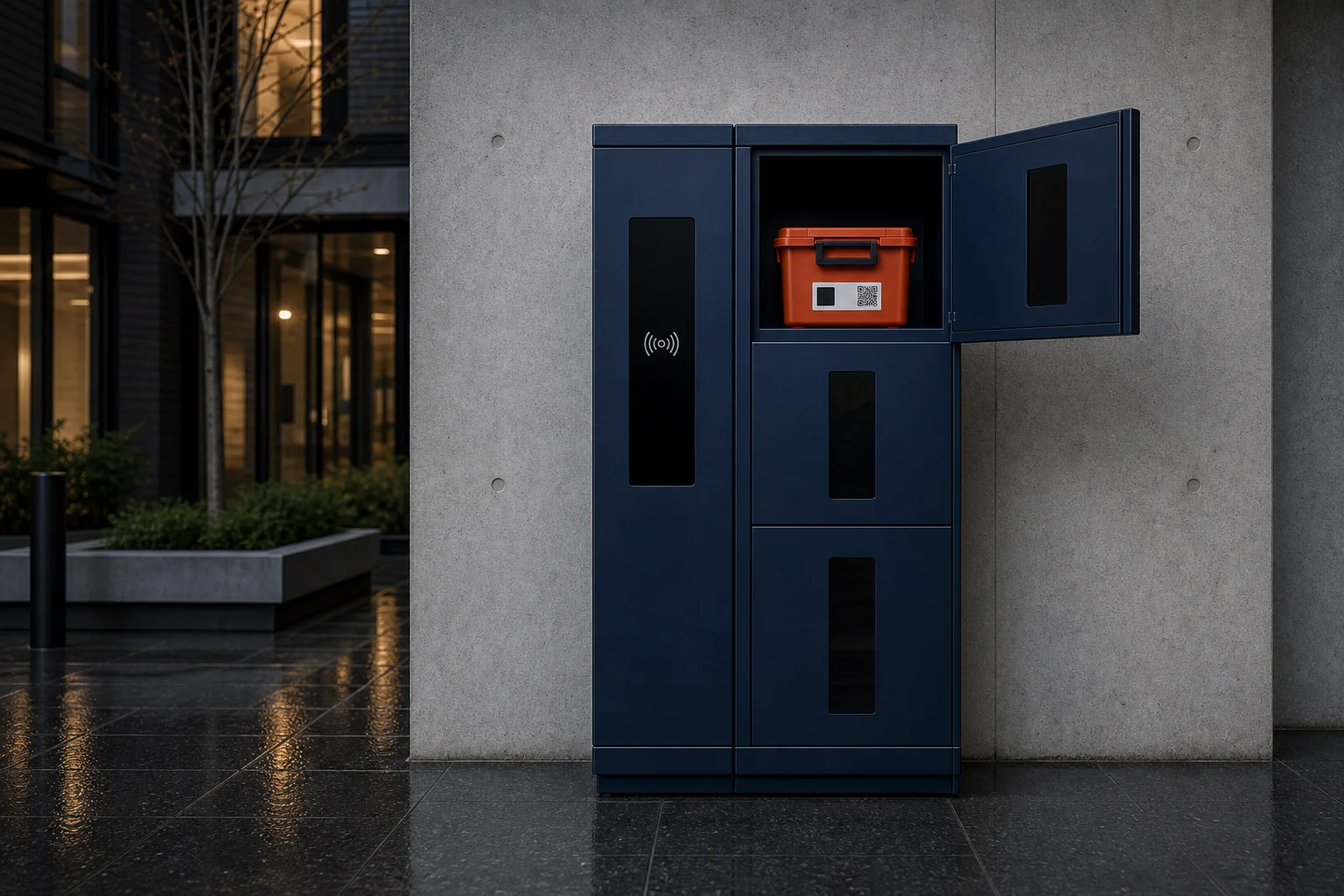
I designed a community e-waste collection service around a simple exchange: a resident deposits a full reusable box and receives an empty one for the next cycle.
The locker is only one part of the system. The full service also has to manage box circulation, bay availability, collection routes, maintenance, cleaning, sorting, and traceability from deposit to inspection.
My contribution
I developed the product concept, mapped the resident and operator workflows, shaped the cabinet and reusable-box system, modeled the service operation, and produced the proposal and visual package used for feasibility discussions.
The work connected several perspectives that are easy to design separately:
- a resident needs an obvious, low-friction exchange;
- a cabinet needs clear door, sensing, fault, and service states;
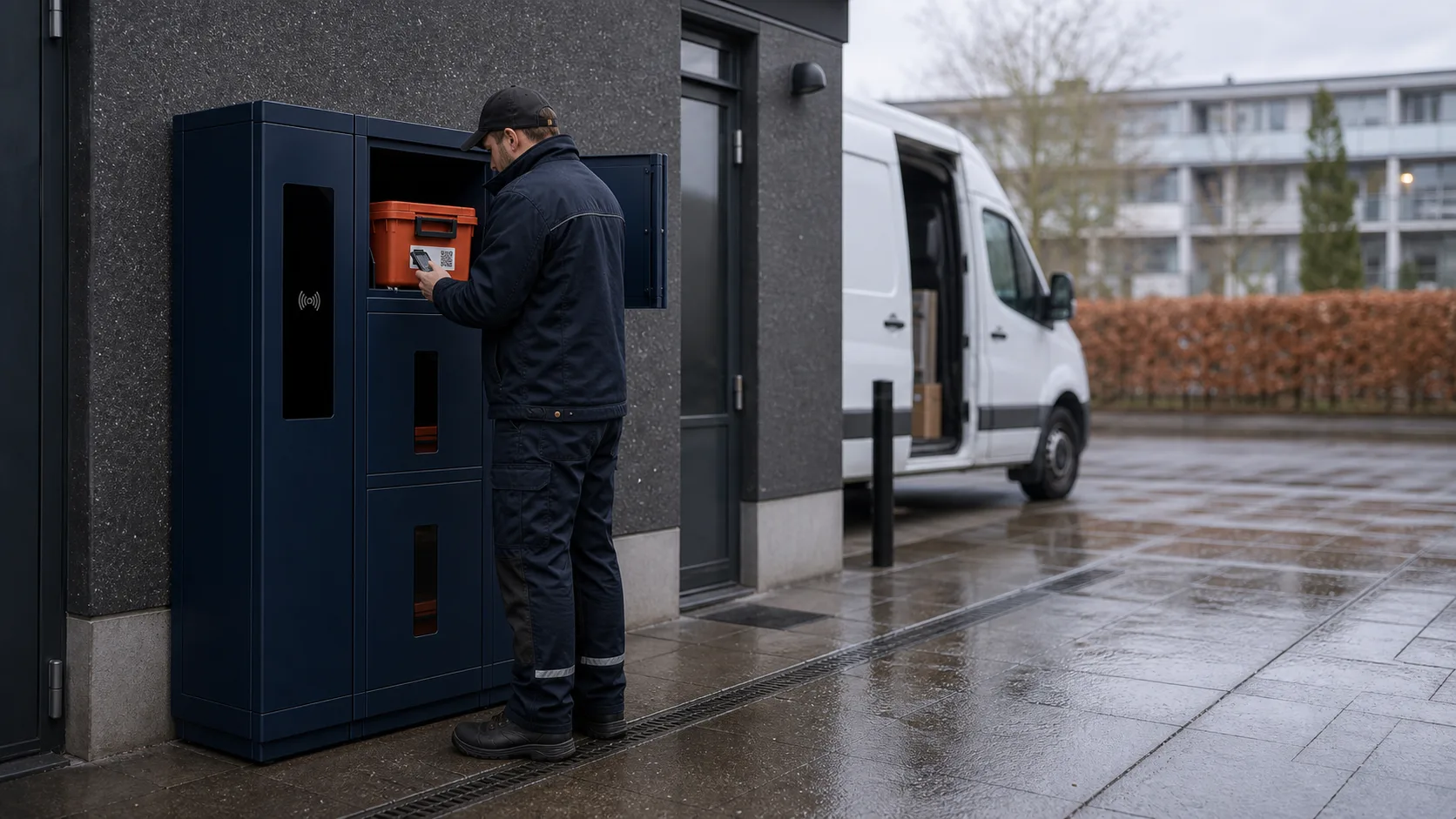
- a collector needs site status and an efficient box swap;
- a sorting team needs box identity and an issue trail;
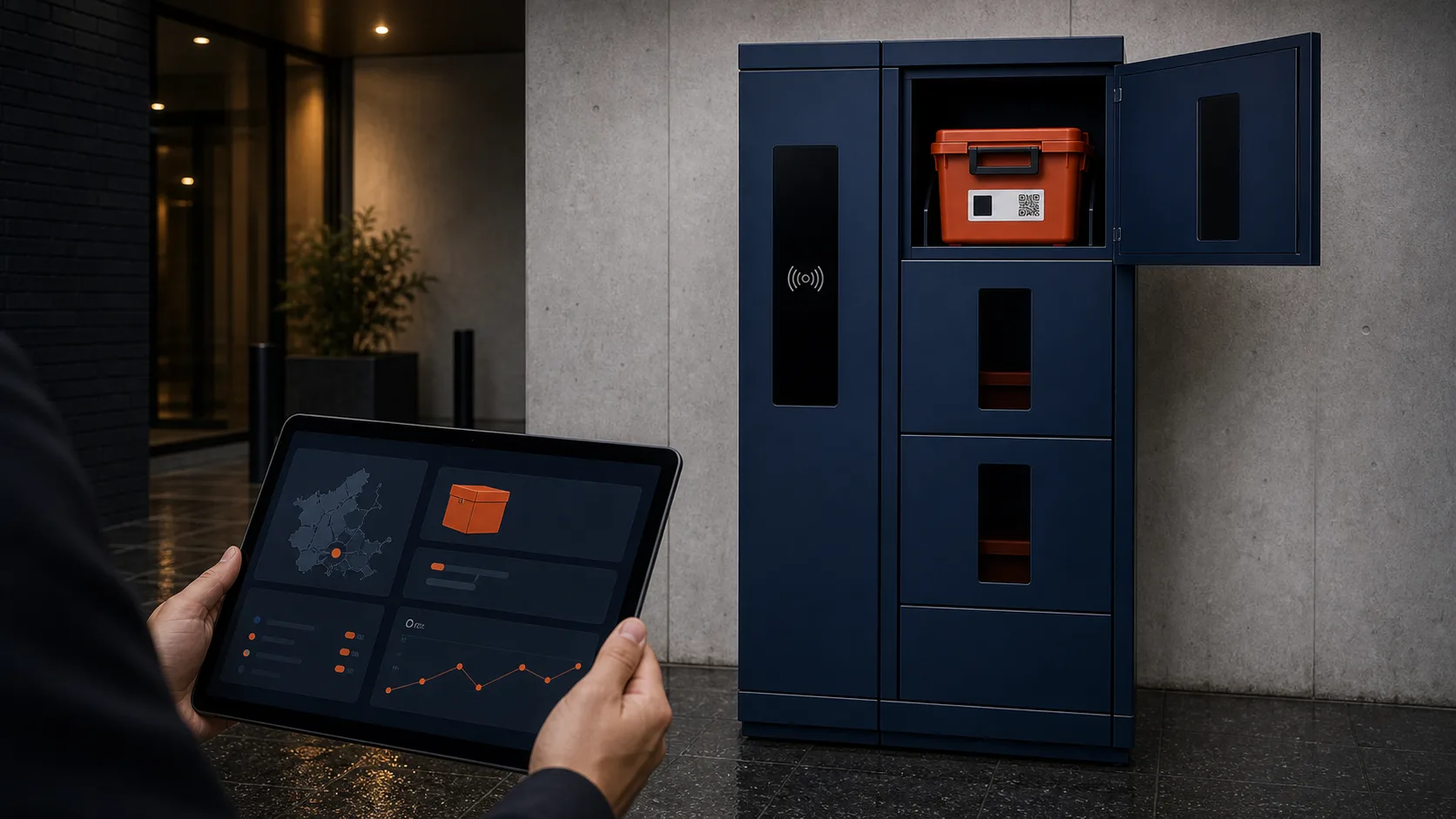
- a program owner needs capacity, maintenance, and participation signals.
The exchange
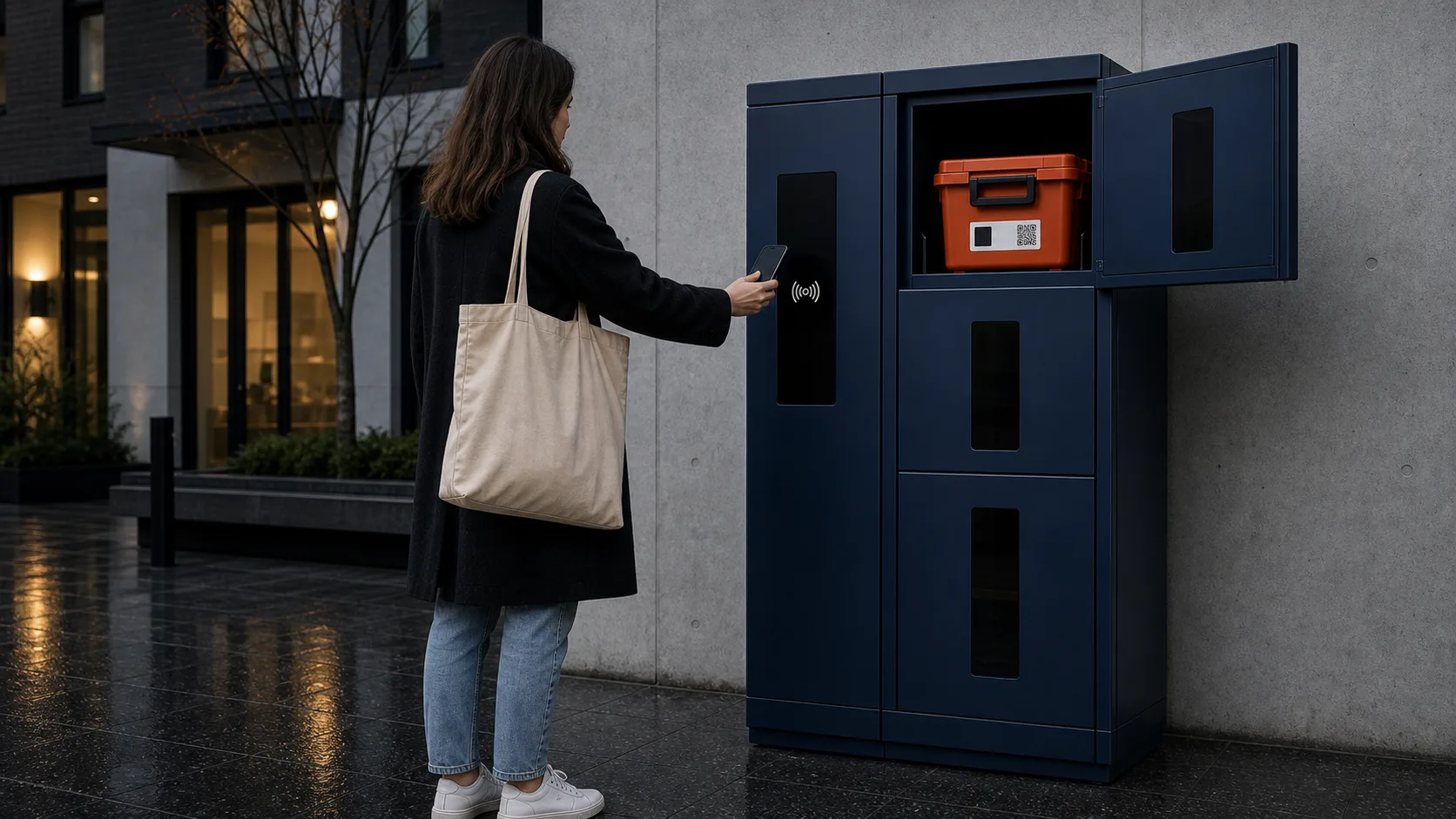
A resident checks availability, scans or taps at the cabinet, deposits a full box into the indicated bay, and collects an empty replacement. The cabinet records the exchange and updates the box, bay, and collection state without turning the interaction into a long onboarding flow.
The design treats the boxes as a circulating pool. A participating household has one active box, but the physical box can change after each exchange. The event history maintains the chain from household to box, cabinet, pickup, and sorting result while keeping identity resolution limited to authorized users.
Operating the service
Service frequency, cabinet capacity, replacement-box stock, cleaning turnaround, and box loss all affect whether the system can scale. I modeled those variables separately so the cabinet design and software reflected the realities of operating the service.
Designing the whole service
The resident interface stays short and cabinet-first. Collectors get site status, box counts, maintenance signals, and an efficient swap workflow. Sorting teams scan the same box identity to record inspection results or trace an issue back to its deposit event.
Those downstream workflows shaped the product as much as the cabinet did. The result is a single system spanning the physical exchange, field operations, and the data needed to keep the loop moving.
What a prototype would require
The next phase would turn the concept into a physical prototype through confirmed box dimensions, mechanism drawings, sensor and lock selection, environmental requirements, electronics, fabrication tolerances, safety review, and workflow testing.